Strongly
nonlinear phononic crystals
The
study of the wave propagation characteristics of few grains of sand
has led in the past to the discovery of an all new area of strongly
nonlinear wave dynamic. Its beauty stems from the combination of its
apparent simplicity and the hidden self-organized complexity, leading
to a revolutionary type of materials behavior.
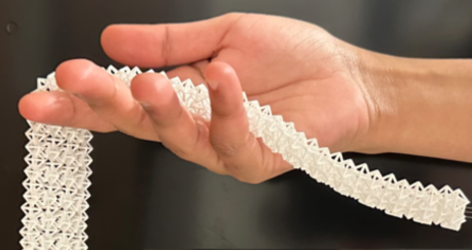
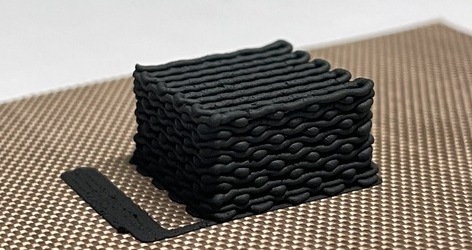
We study new 1-, 2- and 3-dimensional strongly nonlinear phononic crystals
to contribute to the theoretical and experimental investigation of the
basic phenomena guiding the wave propagation in these systems. The physical
aspects at the foundation of these metamaterials reside in a completely
new type of solitary waves, characterized by a finite length, an extremely
fast decomposition of the initial impulse on very short distances and
on the fine tunability of the wave properties and band gaps by an applied
prestress (i.e. by magnetically induced precompression).
Further investigation of these 3-dimensional strongly nonlinear materials
at nano- micro- and millimeter scales will have a broad impact on the
whole area of nonlinear wave dynamics creating experimental basis for
new theories and models as it was widely demonstrated earlier in simple
1-D cases of “sonic vacuum” (systems with no characteristic
acoustic waves speed).
We are interested in exploring various potential applications of the
newly designed materials toward the development of tunable acoustic
lenses and shock protecting devices. Probable analogies with electrical
and optical strongly nonlinear lines can be prompted as a result of
this activity.
Surface
engineering for contact interaction control
To
better tune the nonlinear dynamic properties of layered materials, we
are interested in engineering the contact interactions between the elements
of the system. The CVD growth of various nano-structures, carbon nanotubes,
nanowires, etc. is desirable to tube the mechanical response of our
metamaterials and to discover new wave phenomena for various applications
in light weight heterogeneous structures for protecting layers and energy
absorbing devices.
Biomaterials
The
combination of micro-, nano-devices and materials with biomedical problems
is now receiving much attention from the scientific community. This
synergy can be exploited for answering a variety of different biomedical
questions and can be applied to various bioengineering applications
(ranging from possible rapid DNA sequencing methods to the understanding
of the localized effects of drugs acting on the cell membranes and optimized
cell growth and their enhanced bioactivity). The study of cell mechanics,
the ionic transport through nanoscale pores, the nanotube-enhanced cell
proliferation and the possible integration with microfluidic devices
are all good examples. In addition, the study of the flow of biologic
fluids through narrow pores and channels will allow interesting experiments
with direct practical applications for molecules and cell detection,
filtering, counting, sorting and medical diagnostics.
Advanced
and in-situ characterization of nano- and biological materials
Advanced
characterization techniques play a vital role on materials science.
They represent the key factor for research advancements in all areas
related to nano- and bio-materials.
Conventional, well known TEM, AFM and FIB microscopy techniques, combined
with in-situ testing (stress-strain, temperature, optical and electrical
behavior) and tomography are part of our lab’s efforts to characterize
new materials and their mechanical behavior.
One other project
now being developed is aimed at investigating the origin of life: can
SEM and TEM help finding a signature of the oldest form of life? A structural
study of the carbon forms found in the oldest sedimentary rocks on earth
may help finding an answer to this question.